Overview
Language & Literacy Resources
Guidelines & Objectives
Honoring Voices: Building Language and Literacy Together
Early literacy begins long before children read their first words—it starts with listening, speaking, and connecting with others. From Birth-3rd grade, our approach builds a seamless foundation that grows with each child, aligning learning across home, school, and community.
Language comprehension begins long before children read print. Through storytelling, conversation, and play, children build vocabulary, background knowledge, and understanding of how language works. They also practice reasoning—predicting what might happen next, explaining ideas, and making connections across stories and experiences. These foundations nurture comprehension, oral expression, and cultural identity.
Word recognition begins as children listen for sounds, explore letters, and experiment with writing. Through songs, rhymes, and playful exploration, they learn to hear the parts of words, connect letters to sounds, and begin to recognize familiar words in print. These joyful, hands-on experiences prepare children for fluent, meaningful reading in the primary grades.
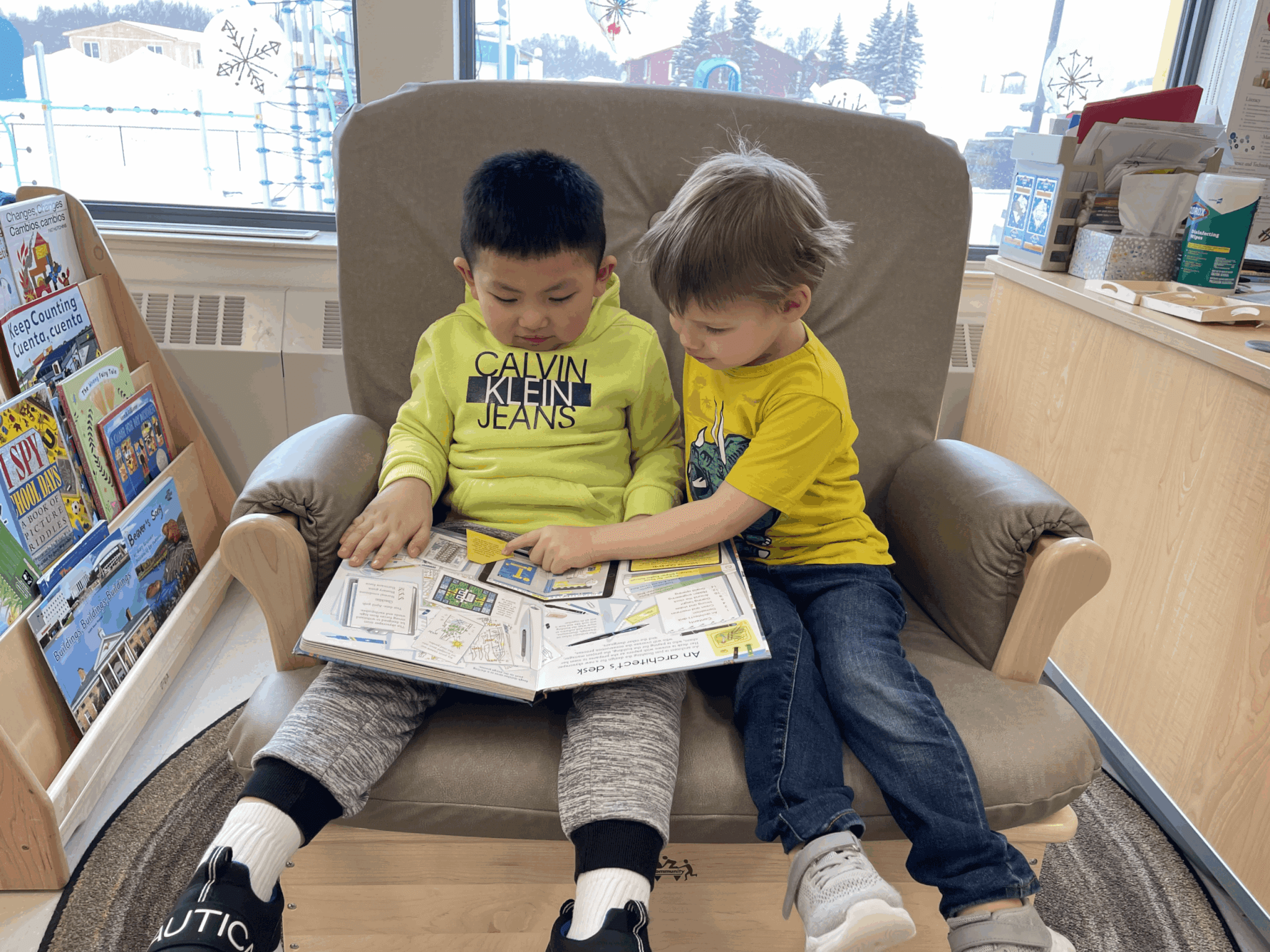
“Early literacy grows from the stories we tell, the songs we sing, and the words we share. Each child’s voice becomes part of the story of our community.”
Language Comprehension Resources – “Building Meaning Through Talk and Story”
Language comprehension grows from a foundation in rich oral language—listening, speaking, and storytelling that help children share ideas, understand stories, and make connections to their world. These experiences nurture curiosity, confidence, and cultural celebration.
Language Comprehension Key Components:
- Oral Language and Language Structure – Using and understanding spoken language and learning how words and sentences work together to make meaning
- Vocabulary – Learning and using new words through conversation, play, and story
- Background Knowledge – Linking new learning to familiar experiences and cultural knowledge
- Print Knowledge – Discovering that print and pictures carry meaning and tell stories
Motivation and engagement bring these elements together. We have developed several strategies to support reading:
- Use books that reflect Alaska and cultures similar to children’s own experiences.
- Track reading with a monthly log, coloring one item for each day read together.
- Strengthen vocabulary by practicing words in students’ native language, when applicable.
- Listen to and learn from stories shared by elders.
- Literacy kits with hands-on activities to build background knowledge & practice skills.
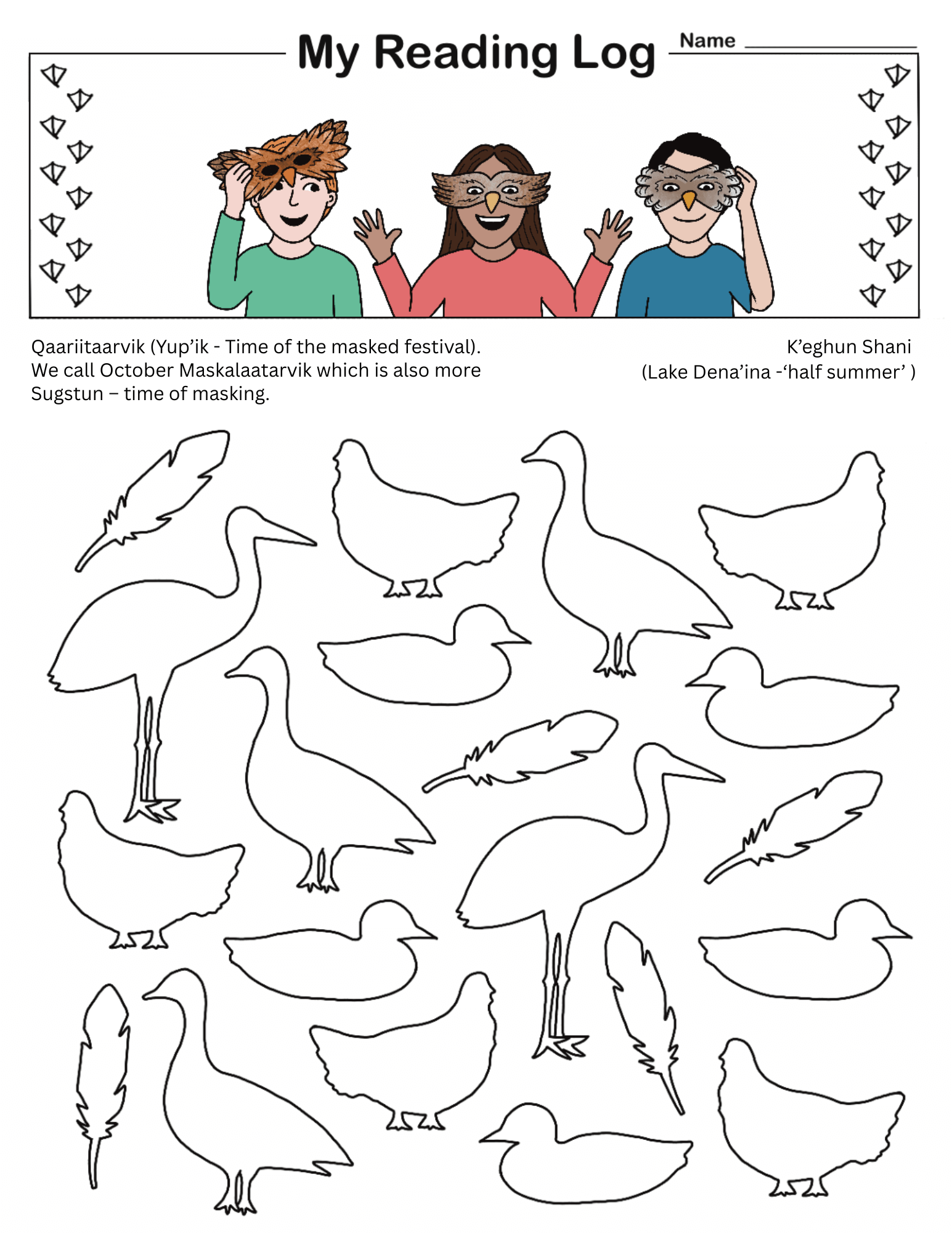
Monthly Reading Logs
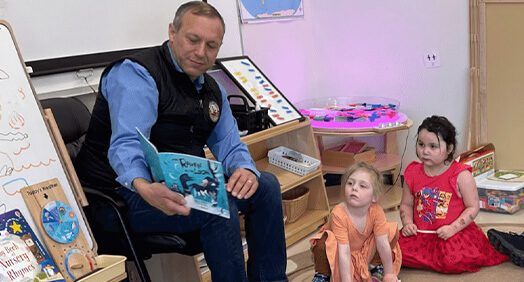
AK Children's Literature
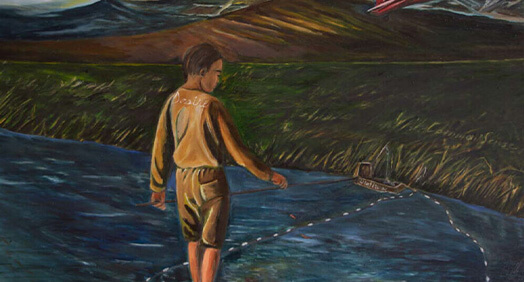
Elder Message Project
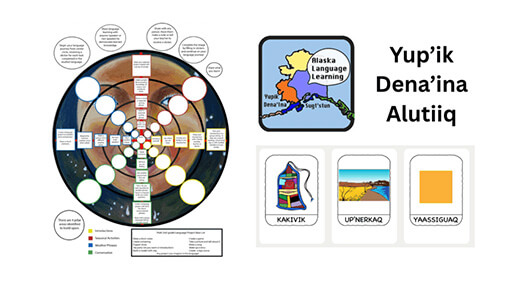
Bristol Bay Language
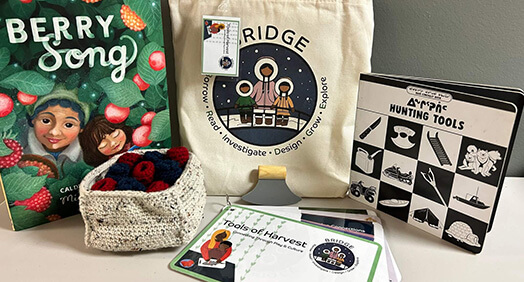
BRIDGE Literacy Bags
Word Recognition Resources – “Playing With Sounds, Letters, and Words”
Phonemic Awareness
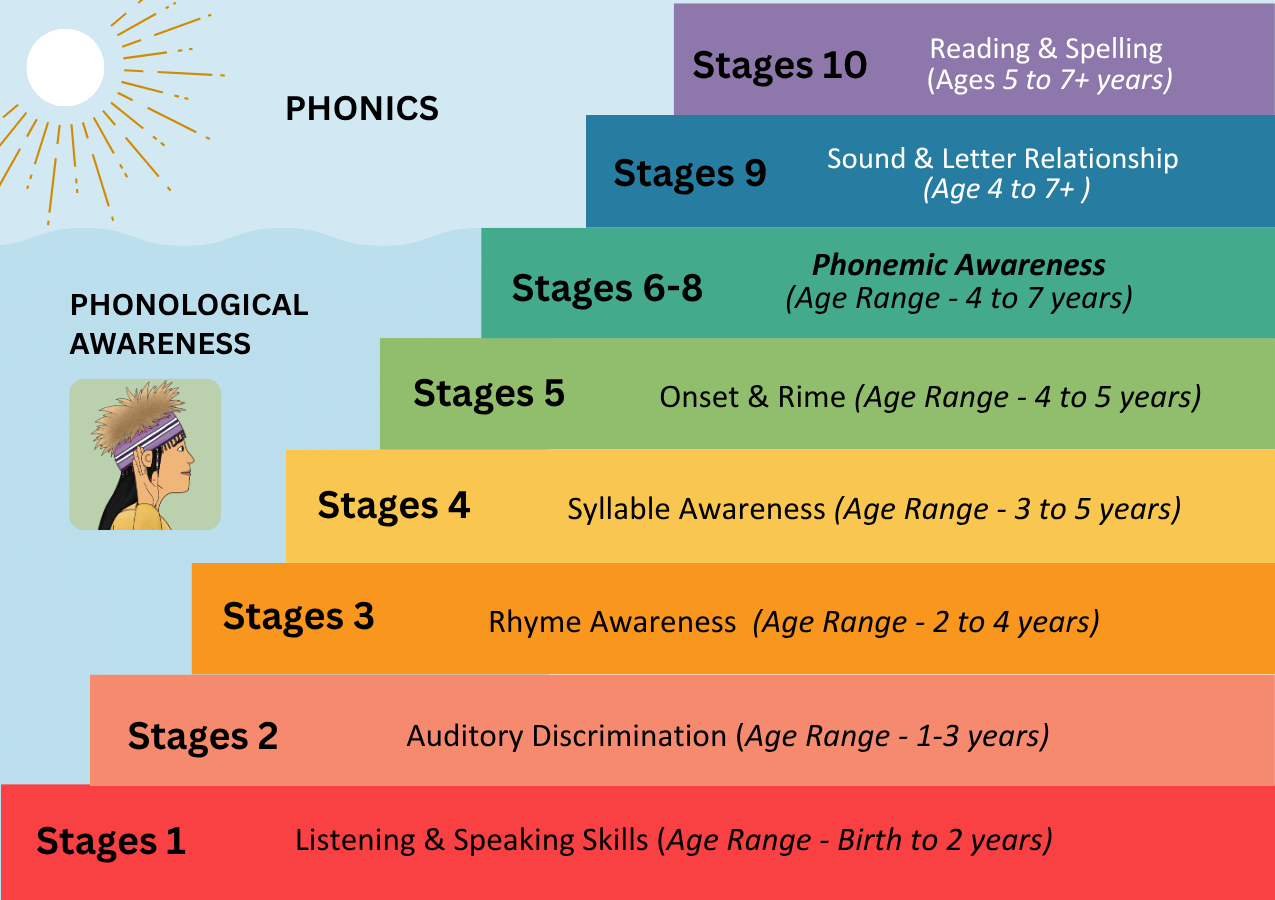
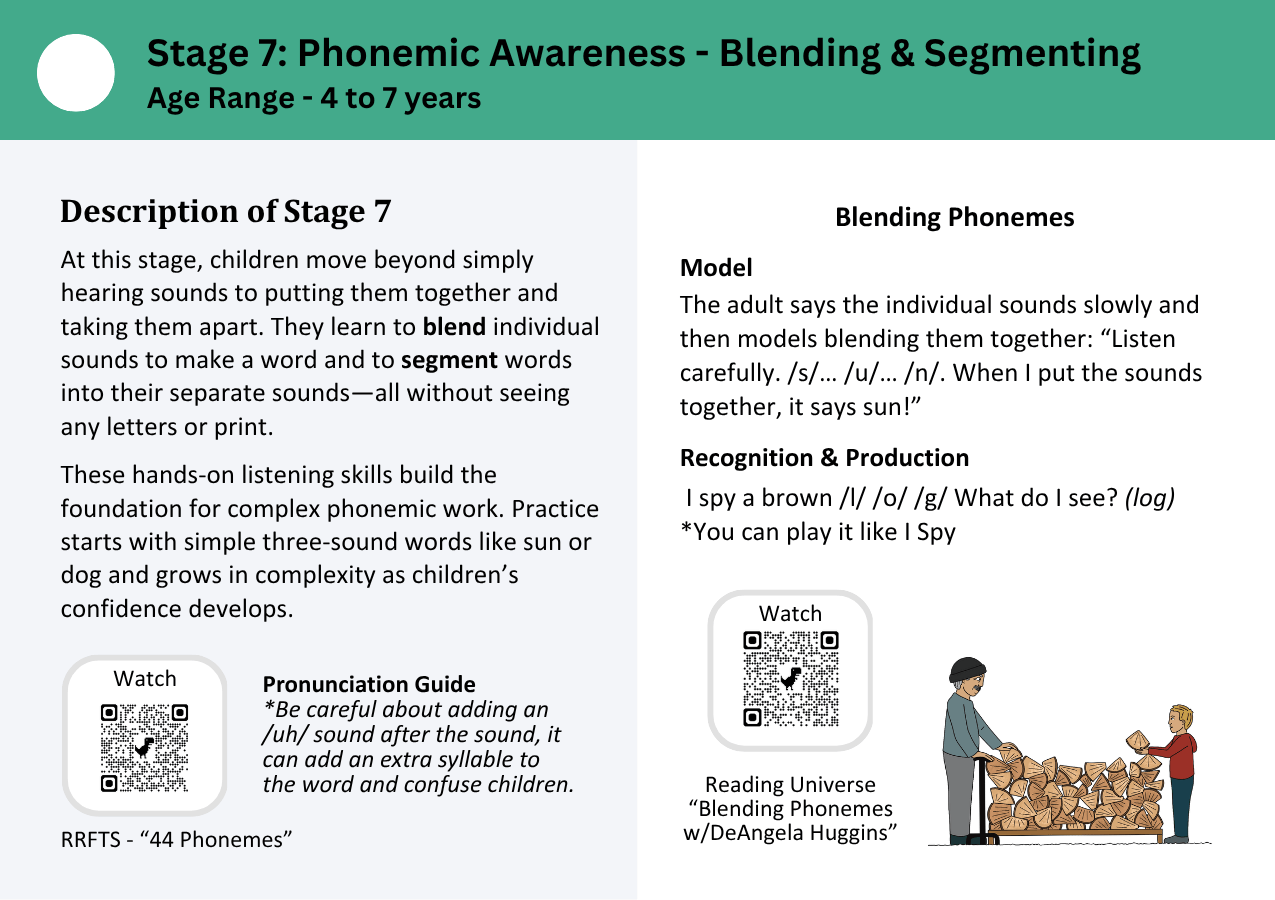
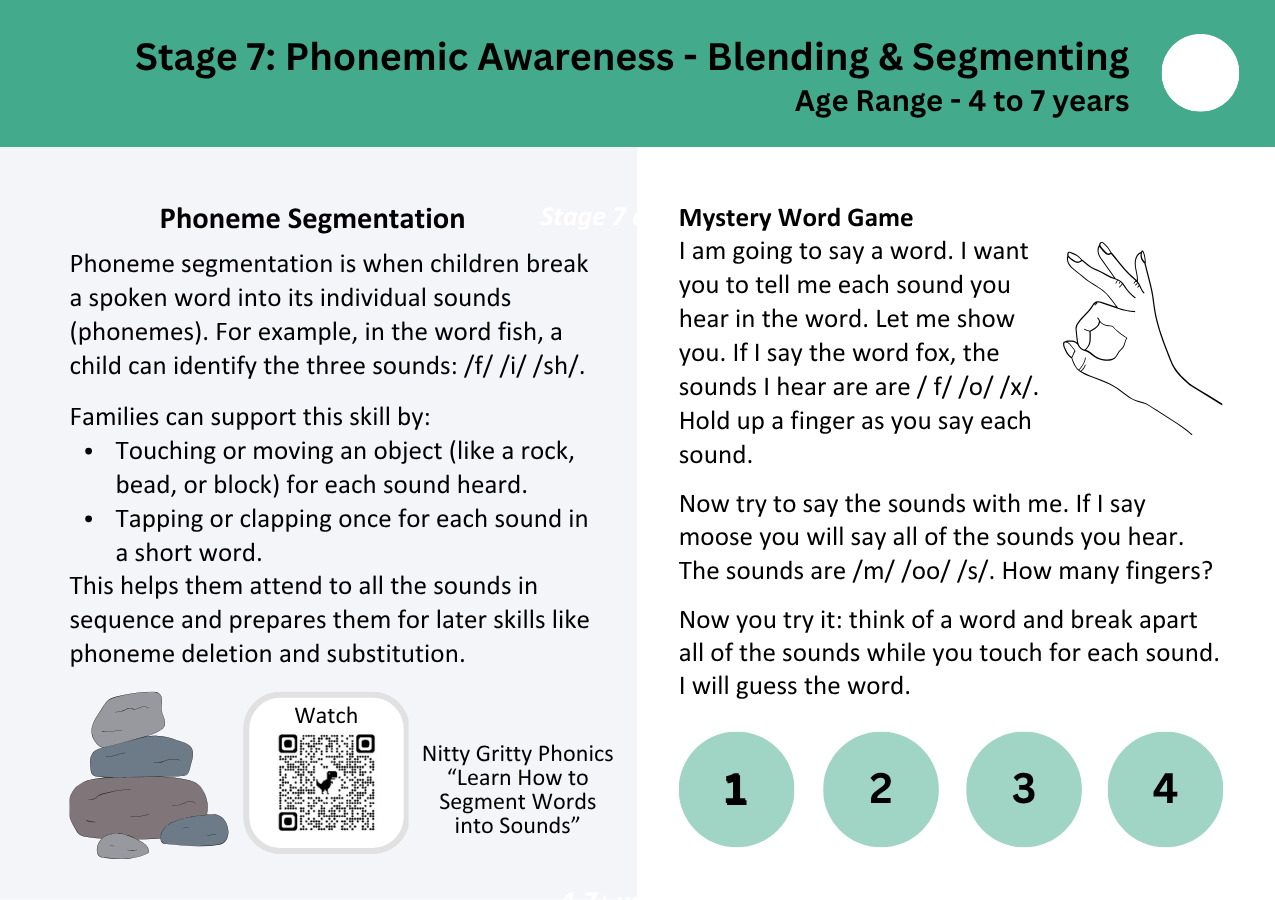
These cards were developed through the Pre-Elementary Grant (2023–2026) to help families and educators support early listening and sound awareness skills that form the foundation for reading. Each stage offers simple, playful ways to explore language through videos, resources, and activities. Print – Laminate – Put on a Ring.
Designed for use in homes and schools, the cards help children tune their ears to the sounds of words, building confidence as they move from listening and speaking to reading and writing.
Phonics & Alphabetic Principle
Alphabet Cards Resource
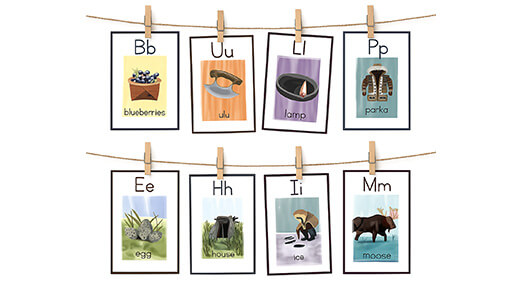
Alphabet learning in early childhood goes far beyond memorizing letters—it’s about connecting symbols, sounds, and meaning. Through playful exploration with our Alphabet Cards, children see and hear letters in the context of words, pictures, and local stories. These experiences help them link print to spoken language and express ideas through drawing, labeling, and early writing.
Alphabet Cards Help Children:
- Recognize and name letters in meaningful contexts
- Connect letter names to sounds and words they know
- Strengthen fine motor and pre-writing skills through tracing and drawing
- Build early spelling awareness by matching sounds to letters in writing
Each letter ties to the land, language, and life of our region—helping children learn to decode words they see and encode the words they want to share. In this way, the alphabet becomes a bridge between culture, story, and communication.
Bringing it Together – Reading & Understanding
Decodables
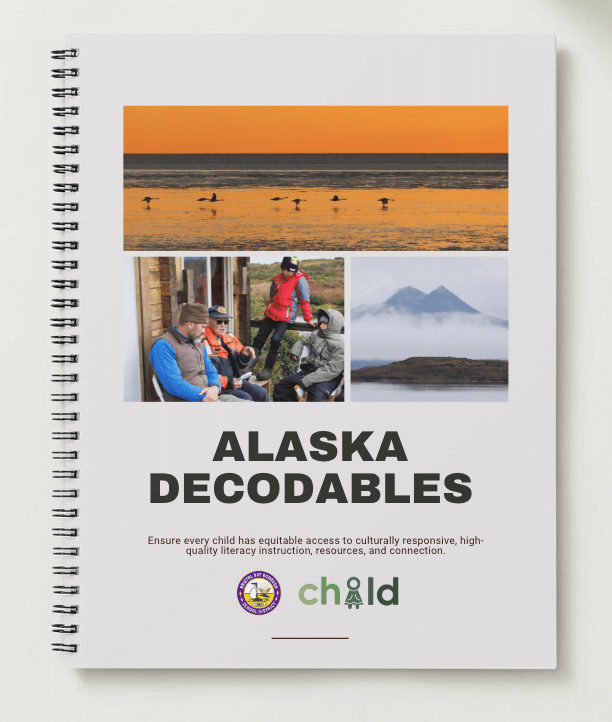
Alaska Decodables is a collection of scaffolded reading passages for Kindergarten through 2nd grade aligned to the UFLI Foundations scope and sequence (not endorsed or promoted by UFLI). Texts include only phonetic patterns and irregular words that have been explicitly introduced, ensuring students practice skills in a carefully sequenced progression. The occasional out of sequence word may be included if the UFLI program utilizes it in the aligned lesson decodable.
The series is designed to bring together the Big Five of reading—phonics, fluency, vocabulary, and comprehension (with phonemic awareness addressed through direct instruction outside of the passages). Each passage includes:
-
Background Knowledge: Activating prior knowledge and building background knowledge through cultural, place-based activity suggestions
-
Phonics: Targeted decoding practice aligned to taught phonics patterns and irregular word spellings review
-
Vocabulary: Explicit word learning connected to text
-
Fluency: Accuracy and expression checks
-
Comprehension: Text-based questions to strengthen understanding
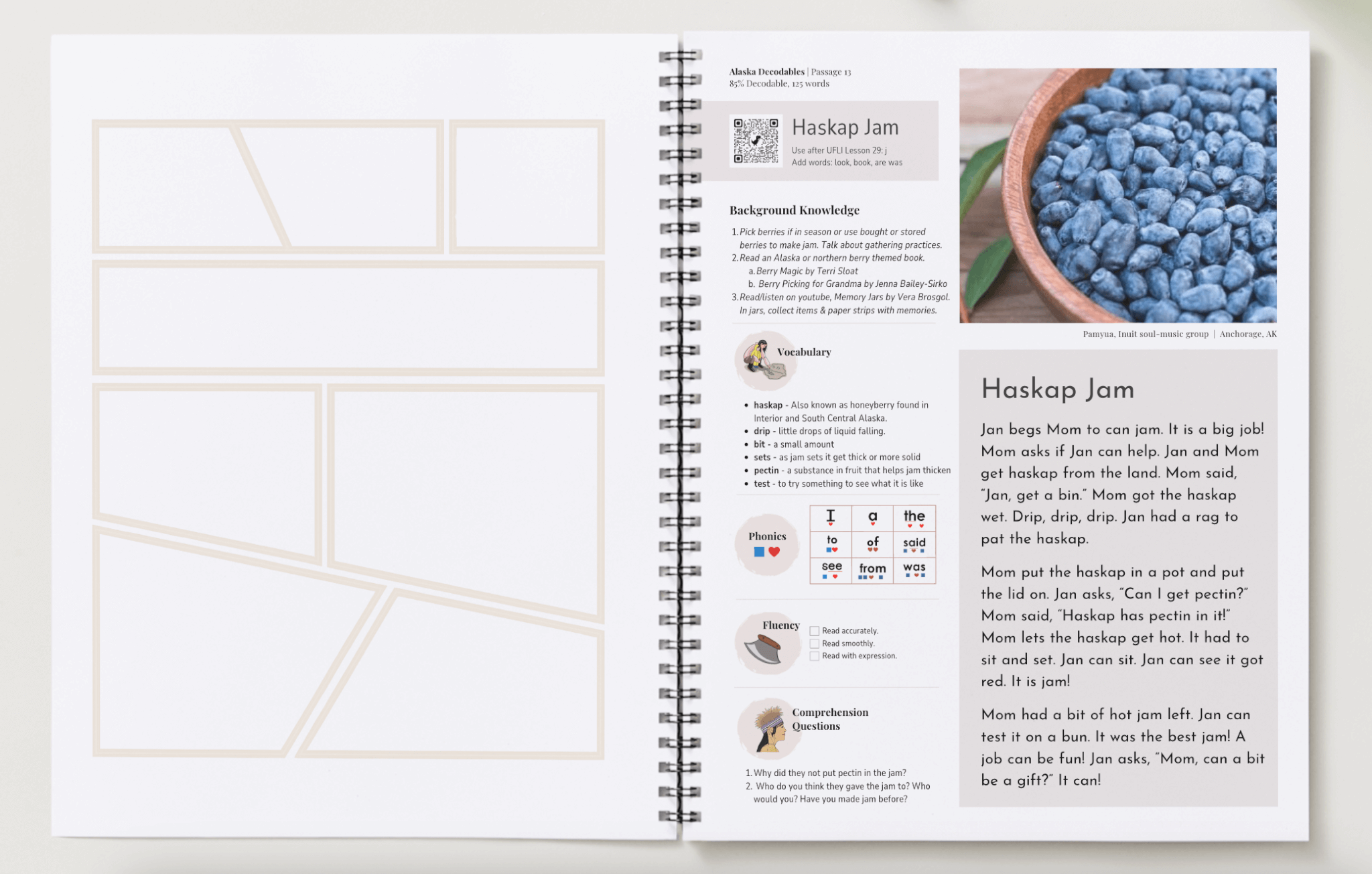
Written at approximately 70–90% decodability, the passages support developing readers while strengthening foundational skills through meaningful Alaska-centered content. Students demonstrate comprehension by illustrating each passage, with comic style options.
In Progress Project - Join Us!
If you have an topic idea or a story you would like to have featured, let us know. We are also looking for illustrations and photographs. We would love to promote you!